Alpha Lipoic Acid And Nerve Health: What The Research Shows
Alpha Lipoic Acid (ALA) is a naturally occurring antioxidant that has drawn substantial research interest specifically in the context of nerve health, more than most ingredients in this category.
Understanding what that research actually shows, and its limits, helps set realistic expectations.
Why ALA draws research interest here
Alpha Lipoic Acid is both water- and fat-soluble, allowing it to work throughout cells in a way many antioxidants cannot. This property has made it a frequent subject of nerve-related research, documented on NCBI.
What clinical studies have found
Where the evidence has limits
Most of this research involves ALA doses higher than what's typically found in a single multi-ingredient daily capsule, and focuses specifically on diabetic neuropathy rather than general nerve wellness in healthy adults. Results also vary across individual studies.
What the evidence does not support
Alpha Lipoic Acid is not a treatment for diabetic neuropathy on its own, does not replace prescribed medication, and should not be used as a substitute for medical care if you have a diagnosed nerve condition.
Applying this to NeuroFlush
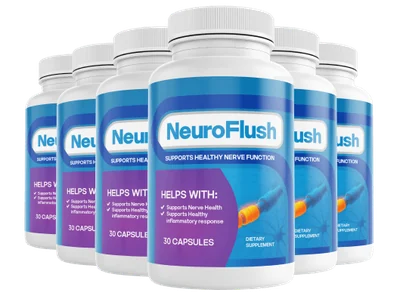
Alpha Lipoic Acid is one of the six named ingredients in NeuroFlush's formula, included for its comparatively well-documented association with nerve cell protection. Given the genuinely promising but context-specific evidence, it's reasonable to view this as a potentially useful complementary ingredient as part of a broader nerve-wellness routine, not a standalone treatment.